Saltwater: from an inflexible ERP to software that fits their fast-moving DNA
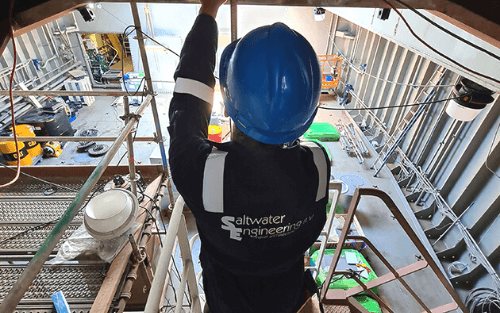

Moving fast is in their DNA, but their ERP software could no longer keep up. They had built it entirely in-house, step by step, year after year. For their next growth phase, Saltwater wanted to take a more deliberate approach: find out which software choices would best support the way they work. So they looked for outside advice. Together with Blis Digital, they took a close look at their entire process.
Flexible in the market, stuck in the system
"We work in a market where there's almost always a rush," says Wouter Besemer, engineering manager at Saltwater. "And we're very good at responding to that flexibly. We call it functional and pragmatic design." That flexibility just no longer applied to their own software.
"I started here in 2011. Back then, at the end of the week you'd fill in a little Excel sheet with what you'd done, someone would type it in somewhere, and out came an overview," Wouter explains. "There were six of us, so that worked fine."
Then the company grew, and the system grew with it. Someone put a database behind that Excel sheet, a web developer came on board, then an intranet portal. A little smarter every year. "You end up in a kind of trap where every year you think: oh, let's just add this. And that."
The company ran fine on what was there, but by then it was built around individual freelancers and separate processes. Wouter: "That makes us vulnerable. If something goes wrong, I depend on one person and their availability. We wanted to change that."
There was another pitfall too. When you spend years building your own system, you start thinking in the shape of that system. "Our entire way of working is geared to it. That means you develop tunnel vision very quickly. And you don't know what else is out there on the market," says Wouter. "So we needed someone who would review our process and say: yes, but you could just do this differently."
"We needed someone who would review our process and say: yes, but you could just do this differently."
Ask the barber if you need a haircut, or get independent advice
That outside perspective turned out to be harder to find than expected. "We presented our case to several parties, and every time the advice was: use our software," says Wouter. "That felt a bit too easy. What we wanted was sound, independent advice."
Through an acquaintance of Wouter's, Saltwater ended up at Blis Digital. And there, they heard a different story.
"What really won us over at Blis was that they said: look, first we'll simply figure out what you want and what you need. We'll put that on paper for you. With that document you're welcome to come back to us for a follow-up project, but feel free to go somewhere else. You're not tied to us."
That lack of obligation made the step a small one. Saltwater went for it.
Two months of sessions that put the whole process on the table
We started with a deep dive. Pauline van Duin, business consultant at Blis Digital: "Saltwater told us themselves: we don't have the knowledge to make a good choice. Should we stay custom-built? Buy something and implement it? Or do something completely different? That was the question."
So we began with a baseline assessment: two sessions in which we mapped out the process at a high level and flagged the risk areas. "We know systems and how things connect to each other," says Pauline. "That made it fairly easy to see: this is a standard process, and these are the critical processes. Those are the ones we need to dig into."
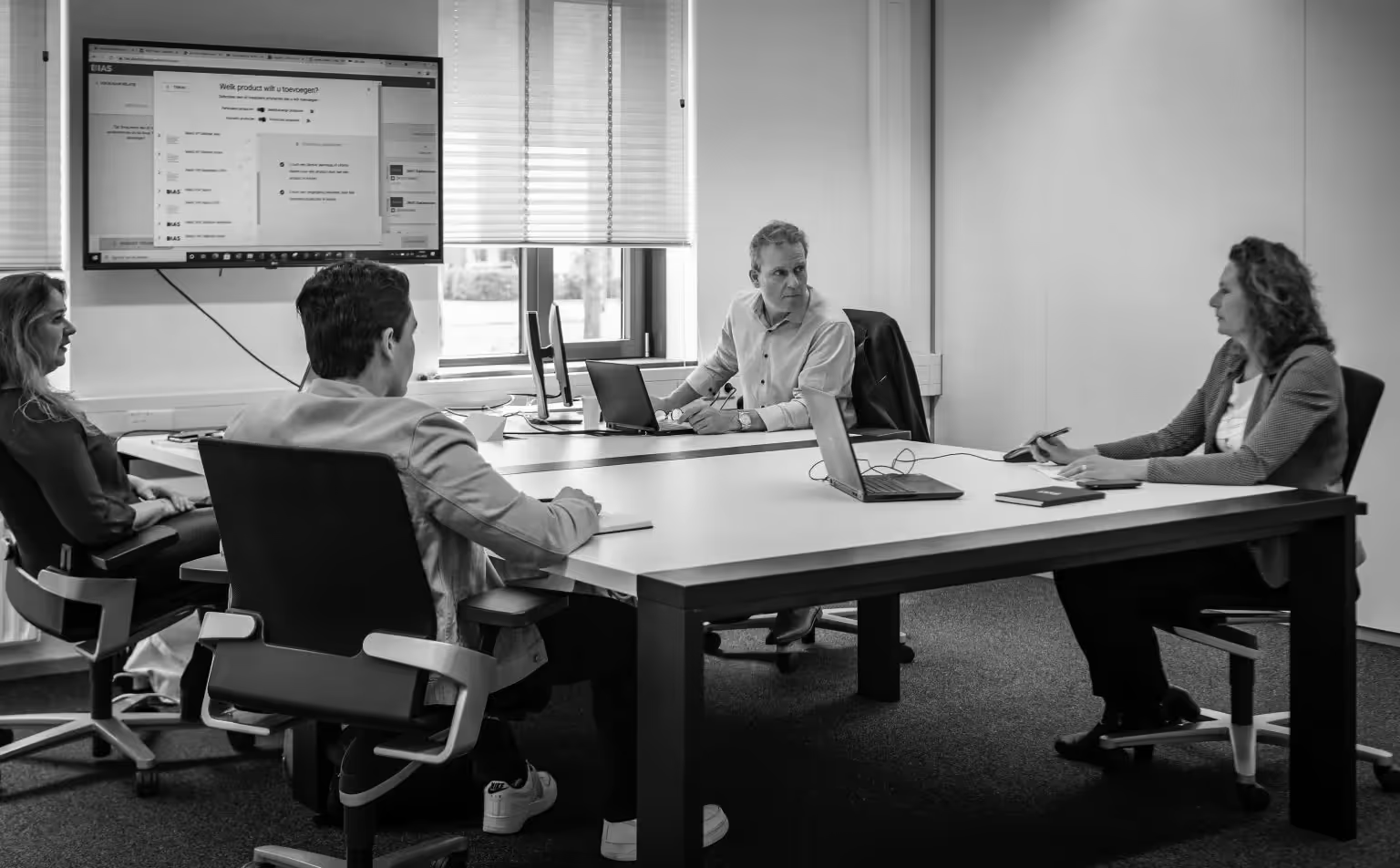
Then came the in-depth phase: two months, with a session on site at Saltwater every week.
For this, Wouter set up a test project in Saltwater's system and walked through it with us from start to finish. From the first quote to the final invoice.
Homework that makes you rethink your own choices
"What stuck with me most is that for so many things, there was always another 'why'," says Wouter.
That was intentional, says our UX designer Kim van Olderen: "We wanted to uncover the underlying goal of certain steps. So we kept asking: what are you actually trying to achieve with this?" After every session, we sent Saltwater off with homework: dare to reconsider what had worked well enough for years, and describe what your ideal future looks like.
Take planning. Saltwater runs a lot of projects each year and uses a document list for every project. At one point it made sense to link the planning directly to that list: one overview, everything in one place. But with thirty projects running at once and fifty documents per project, a planning like that grows to thousands of lines. "And then it's actually useful when someone asks: do you really want to plan at document level?" says Wouter.
The homework worked because Saltwater fully committed to it. "They were very productive, very helpful and open," says Pauline. "Even when we asked tougher questions or were critical, they engaged in the conversation. There was a lot of trust, on both sides."
"What stuck with me most is that for so many things, there was always another 'why'."
Dozens of pages of requirements, with AI as a right hand
Everything that surfaced in those sessions had to end up somewhere. We recorded the entire process: recordings, notes, boards and designs. From that, we used AI to build the complete requirements document.
"The PRD, the Product Requirements Document, was ultimately made entirely with AI," says Pauline. "But in a very structured way. First I created a skeleton of what needed to go in it. Then I had AI fill it in based on everything it had heard. I reviewed that once more. Only after that did the full write-up follow."
The result: a tightly structured document of dozens of pages, plus an RFI list (Request for Information) with all requirements for vendor selection. "Last year I still wrote a document like that by hand; it takes you twice as long," says Pauline. "And with AI you're much less likely to miss something, because AI tends to do too much rather than too little. Then it's a matter of cutting and fine-tuning."
Our advice followed three tracks: an ERP package as the foundation, a client portal for exchanging documents with clients, and dashboards that show management how things are going. Because the project ran so smoothly, there was even room for more than agreed: a working prototype and designs for those dashboards. "We hadn't planned that at the start," says Kim. "But because it was going so well, we could take that extra step to really visualise it for them."
"Last year I still wrote a document like that by hand; it takes you twice as long. And with AI you're much less likely to miss something."
What Saltwater would tell other companies
Can't see the wood for the trees when it comes to your ERP? Wouter keeps it short: "It's definitely worth having an outside party take a look."
As far as he's concerned, the strength of that lies in the people. Wouter laughs: "Blis simply has people who really know what they're talking about, who dive into the subject themselves and want to know every detail. You feel it's in good hands. And they bring something tasty to every meeting too!"
"Blis simply has people who really know what they're talking about, who dive into the subject themselves and want to know every detail. You feel it's in good hands."
The project that started with the freedom to walk away ended with the choice to stay. We're now working together to find the best vendor for Saltwater. The goal: by the end of this year, the whole company runs on the new software.
FAQ
Frequently Asked Questions
We're happy to answer them in advance. If your question isn't listed, please feel free to contact us.