%20groot.jpeg)
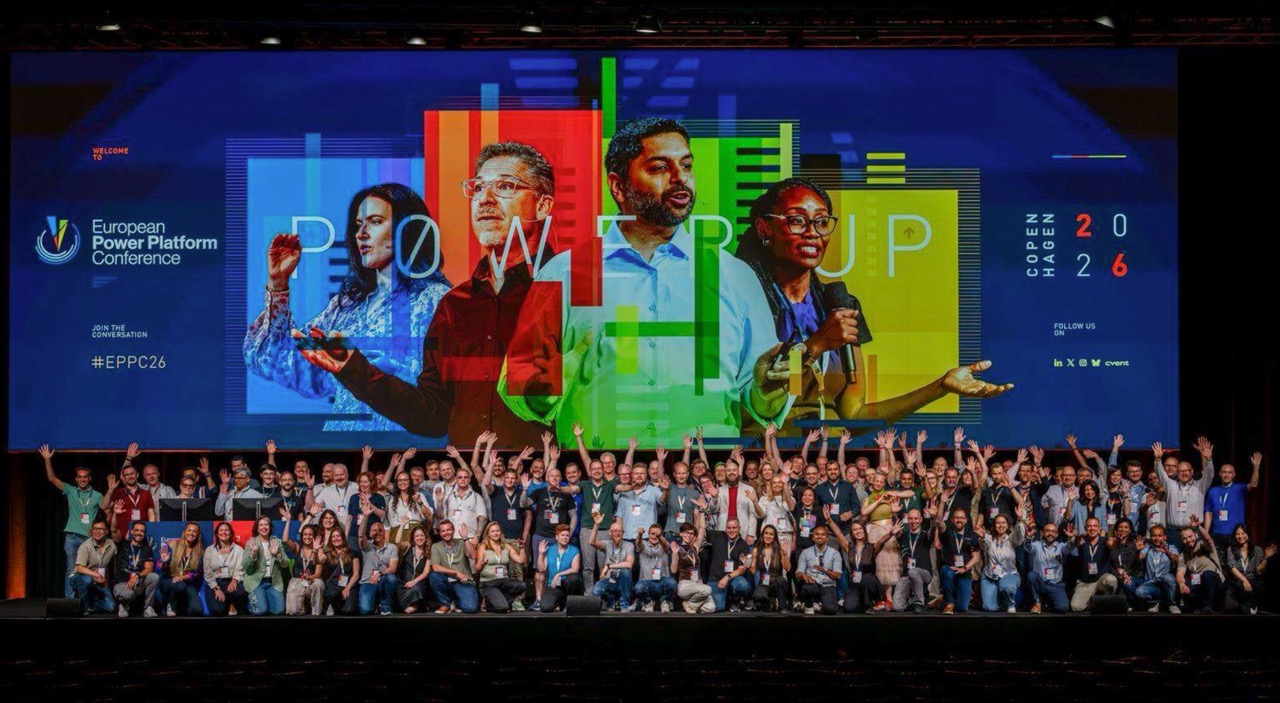

And perhaps the best part: all three of us got to give a presentation ourselves. That is exactly what makes a conference like this so valuable. Not only learning from others, but also sharing our own experiences, real-world examples and insights with peers.
AI is not a goal, but a means
Anyone who attended the conference could not miss it: AI is everywhere. New possibilities are arriving at a rapid pace, and almost every session showed how AI is changing our work as makers, developers and administrators.
The key thought we took home from the keynote: we are constantly looking for the right application of AI, but not at any cost.
Technology is not an end in itself. The question always stays the same: does it genuinely move our clients forward? Does it make a process smarter, faster or easier to use? Only then do we add value.
Building smarter thanks to AI
For makers, there were plenty of exciting developments to see. AI is being integrated ever more effectively into the Power Platform development process.
From generating code and speeding up app building to support while developing with low-code and pro-code solutions. Think of the capabilities of GitHub Copilot, Claude Code and other AI-driven development tools that work together with the Power Platform better and better.
The result? Less time spent on repetitive work and more time for the solution itself. Ultimately, that leads to a shorter time-to-market and more room to focus on what truly adds value.
More possibilities for the end user
It is not only developers who benefit from the new capabilities.
A lot is changing for end users too. Agents can become part of applications more and more easily. As a result, users can ask questions at any moment of the day, in their own words. The agent understands the question, retrieves the right information and presents it directly within the context of the application.
That makes software not only smarter, but above all more accessible. The user has to search less and gets the information they need at that moment more quickly.
A lot is changing for administrators too
While the front end of the Power Platform keeps getting smarter, the back end is developing at lightning speed as well. Microsoft is clearly betting on a future in which agents play an ever larger role as a new way for users to interact with applications and data. That automatically means the role of the Power Platform administrator is changing too.
During the conference we saw great developments around managing agents through the Microsoft 365 Admin Center. This gives organisations increasingly more ways to keep a grip on their AI landscape. Administrators can gain insight into how intensively agents are used, where users run into issues, what costs are involved and how these relate to the value delivered.
That last point is exactly what matters. AI is interesting, but in the end every organisation wants to know what an investment actually delivers. By providing insight into usage, governance, costs and return, administrators get the means not only to stay in control, but also to make well-founded choices about deploying and further growing agents within the organisation.
Some things thankfully never change
Amid all the innovation, one more thing stood out to us.
Despite all the new technology, one answer stays surprisingly often the same.
It depends.
Which solution fits best? Do you choose Power Apps? Copilot Studio? An agent? Power Automate? Or a combination?
The answer still depends on the context, the users, the process, manageability, the costs and the desired user experience.
That is exactly why the conversation with the client matters more than ever. Not starting with the technology, but with the question behind the question.
From digitising to automating to agentifying
For everyone working in the Power Platform every day, the developments can sometimes feel overwhelming. New possibilities follow one another at a rapid pace, while other techniques slowly fade into the background.
But really, one simple comparison helps. If someone asks what you do for work, you probably do not say:
"I write Power Fx formulas."
Or:
"I build Power Automate expressions."
No.
You say something far more fundamental.
We help organisations make their business processes smarter.
First by digitising. Then by automating. And now we are taking the next step: agentifying.
That may be the biggest change of this moment. The techniques change. The names change. The tooling changes. But our mission stays exactly the same.
IT has never been the goal. IT is the tool with which we help organisations work more efficiently, more smartly and more future-proof.
And that is precisely what makes the profession perhaps more rewarding than ever.
On to the next edition.
FAQ
Frequently asked questions
We'd be happy to answer those right away. If your question isn't listed, please feel free to contact us.
Automating makes a process follow fixed, predefined steps. Agentifying adds agents that understand a question, retrieve the right information themselves and present it within the context of the application.
Yes. Tools like GitHub Copilot and Claude Code support both low-code and pro-code development, from code generation to spinning up apps faster. That shortens time-to-market and frees up room for the solution itself.
Through the Microsoft 365 Admin Center, administrators gain insight into usage, bottlenecks, costs and value delivered. This lets them not only stay in control, but also make well-founded choices about further deployment.
It depends on the context, the users, the process, manageability, the costs and the desired user experience. Do not start with the technology, but with the question behind the client's question.
Technology only adds value when it makes a process smarter, faster or easier to use. The core question stays whether it genuinely moves the client forward, not whether something is technically possible.